Seekers Notes: Hidden Objects
- 4.3
- Rating
- 10.00M
- Installs
- Free
- Price

 Analysis by App-foxy
I spent time with Seekers Notes: Hidden Objects as an adventure game built around searching detailed scenes, following clues, and uncovering the secrets of a cursed city. Its basic idea is easy to understand: examine a busy picture, locate the requested items, and use what you find to move the investigation forward. What makes the experience more than a quick hidden-object puzzle is the way those searches are tied to a continuing mystery rather than presented as isolated challenges.
That structure gives the game a comfortable rhythm. I could play for a short while, finish one task, and put it down, or stay longer when a chain of discoveries made me curious about the next part of the story. It is a good fit for people who enjoy visual observation, light adventure, and gradual progress without needing fast reflexes. It is less suitable if you want a completely offline-feeling puzzle game with no pressure to manage your play sessions or spending.
How the cursed-city adventure works
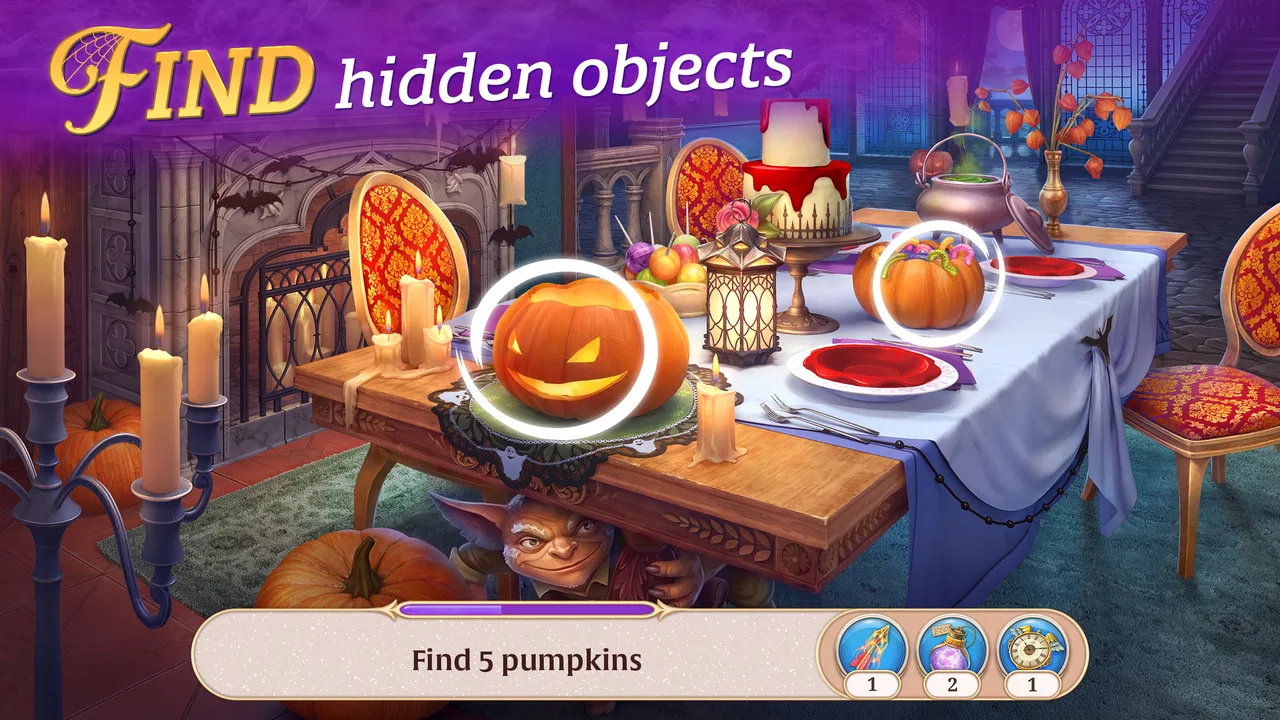
The central activity is searching for objects hidden among cluttered scenery. At first, this sounds simple, but the challenge comes from learning how each scene is arranged and resisting the temptation to tap randomly. Objects can blend into the background, sit near similarly colored details, or appear in places your eyes have already passed over. I found that careful scanning was more satisfying than rushing, especially when the scene contained several visual distractions.
You May Also Like

 Blood Strike: 2.5 Anniversary
Blood Strike’s Loadouts Turn Every Drop Into a Tactical Gamble
A close look at Blood Strike’s custom loadouts: how fast access to signature weapons reshapes its battle royale rhythm, rewards preparation, and narrows the gap between fights.

 Pandora - Music & Podcasts
Pandora’s Music Is Easy to Start, but Harder to Recover
Pandora’s strength is its low-effort path from a seed to a station. Its weak spot is how much confidence it asks you to place in connection, setup, and quiet recovery.

 8 Ball Pool
 Is Built on Rivalries, Rematches, and Routine
A close look at the rivalries, rematches, shared routines, and unanswered safety questions that turn a quick pool match into a persistent mobile community.

 Samsung Music
’s Quiet Strength Is Playing What You Already Own
Its reach comes less from spectacle than from dependable access to a personal library. That simplicity is both the app’s strongest retention engine and its ceiling.

 AccuWeather: Weather Radar
AccuWeather Review: A Quick, Clear Forecast for Everyday Decisions
For everyday plans, the best forecast is the one you can understand quickly. AccuWeather makes rain timing, radar, and local conditions easy to act on, with a few trade-offs.

 Hill Climb Racing
Why Hill Climb Racing Still Turns Crashes Into One More Run
A tiny car, a bumpy hill and one more upgrade: Hill Climb Racing keeps resurfacing because its simple chaos makes every near-miss feel personal.
More From Our News Desk



The adventure layer gives those searches a reason to matter. Instead of completing a picture merely to see a score, I was working toward discoveries connected with the city’s mysteries. That framing helps the game appeal to players who might normally find hidden-object exercises repetitive. The story does not replace the puzzle loop, but it gives each search a little more purpose and encourages steady progress.
Mytona has positioned the game as an approachable adventure rather than a demanding action title. There is no need for rapid movement or complicated controls; the important skill is attention. That makes it comfortable on a phone, particularly when I wanted something calm to play while waiting or taking a break. The trade-off is that the experience depends heavily on whether you enjoy looking closely at the same kind of scene repeatedly.
Why the visual searches become harder than they look
The early searches teach the basic habit of inspecting the whole image instead of focusing only on the center. Later, familiarity with the scene style can work both ways. It helps me recognize the kinds of details the game likes to hide, but it can also make me overconfident and skip areas too quickly. My most useful approach was to divide each picture into small sections, sweep from left to right, and only use assistance after I had made a genuine attempt.
That method matters because hints are most valuable when they resolve one stubborn item rather than replace the entire search. When I used help too early, I lost some of the pleasure of solving the scene myself. When I saved it for a final object that had blended into the artwork, it felt like a practical tool instead of a shortcut. Players who enjoy solving puzzles independently should treat assistance as a limited resource in their own personal routine, even when the game makes it easy to reach for it.
Another useful habit is to slow down when the requested item seems visually ordinary. A small object may be hidden through color, scale, or placement rather than by being covered completely. I also found it helpful to read the target word carefully. A broad interpretation can lead me to search for the wrong shape, while the exact wording often points toward a less obvious version of the item.
Progress feels better when you play in short sessions
This is one of those games that works naturally in small portions. A realistic everyday use would be opening it during a commute break, completing a search or two, and returning later when there is more time for the surrounding investigation. That flexibility is one of its strongest practical qualities. I did not need to remember a complicated control scheme, and the basic interaction was immediately familiar each time I returned.
Short sessions also help with the game’s repetition. If I played for too long, the visual searching could start to feel like work rather than relaxation. Breaking the experience into smaller visits kept my attention sharper and made each completed scene feel more distinct. For someone who enjoys longer uninterrupted adventures, this stop-and-start design may feel less immersive than a traditional narrative game.
The age guidance is Everyone 10+, which matches the game’s general tone as an accessible mystery adventure. It can suit older children and adults who enjoy puzzles, though the appropriate choice still depends on how comfortable a player is with the game’s themes and purchase options. I would describe it as gentle in its interaction style, but not as a pure children’s puzzle toy.
What you receive without paying, and where value changes
The game is free to download and play, so the initial commitment is low. That matters here because hidden-object games are personal: some players will enjoy the search loop immediately, while others will find the repeated scene work too slow. Being able to try the core experience without paying makes it easier to decide based on actual play rather than on the premise alone.
There are in-app purchases ranging from $0.99 to $99.99 per item. I would not treat the existence of those purchases as a reason to dismiss the game, but I would keep them in mind before settling into a long-term routine. The free entry delivers the main reason to try the game, while paid items can change how comfortable progress feels for players who want more convenience or faster momentum.
My advice is to establish a personal rule before buying anything. For example, I would first play several sessions using patience and ordinary searching, then decide whether the game is enjoyable enough to justify spending. If a purchase only removes a momentary obstacle, waiting is usually the better value. If the game has become a regular relaxation habit, a small, deliberate purchase may feel more reasonable than repeated impulse spending.
The best value is found by treating purchases as optional convenience, not as part of the admission price. That distinction keeps the free experience honest: you can explore the game without paying, but players who want to accelerate or smooth their progress should think carefully about the cost of doing so. I would be especially cautious with the highest-priced option, because a large payment deserves a clear personal benefit rather than a decision made during a frustrating search.
How it compares with other hidden-object adventures
Compared with a simple standalone hidden-object puzzle, this game offers more of a reason to continue. The cursed-city setting and mystery structure provide context around the scenes, so the appeal is not limited to finding a list of items. That makes it a stronger choice for someone who wants a light narrative thread alongside visual puzzles.
On the other hand, a focused puzzle title may be better for someone who wants a clean, self-contained experience with no long-term progression to consider. A traditional adventure game may also be preferable if you want direct exploration, character control, or more varied interaction than tapping objects in illustrated scenes. Seekers Notes sits between those expectations: it has an adventure identity, but its moment-to-moment play remains firmly centered on observation.
It also differs from fast mobile games because the main challenge is not reaction speed. I could play at my own pace and concentrate on details. That makes it a good alternative when I wanted something quieter than an action game. The downside is that players looking for constant novelty may notice the repeated search format sooner than they would in a game that changes mechanics more often.
Small techniques that improve the experience
One technique that helped me was separating recognition from tapping. I first identified the general area where an item might be, then checked its edges and surrounding colors before touching the screen. This reduced accidental taps and made difficult scenes feel more like visual problems to solve. It is a simple change, but it turns frantic searching into a repeatable process.
I also recommend pausing mentally after a failed search rather than immediately repeating the same scan. If I had already checked the obvious locations, the missing object was probably hidden through an unusual interpretation of its appearance. Looking for a different texture, outline, or scale was more productive than moving my eyes faster. This is particularly useful for players who are good at spotting large objects but tend to overlook tiny details.
For a relaxed routine, I would avoid spending when frustration is at its highest. A short break often restored my attention more effectively than a paid shortcut. Returning later can also make the scene look different because I am no longer locked onto the wrong area. That approach preserves the satisfaction of discovery and keeps the free path meaningful.
Where the game delivers real value
The strongest value comes from its combination of accessibility and atmosphere. I could understand the objective immediately, yet the surrounding mystery gave me a reason to keep going. The game is also easy to recommend to someone who likes puzzles but does not want complex controls. It asks for patience and observation, not gaming expertise.
Its large player base reflects that broad appeal: the game has passed ten million installs, with an average rating of 4.3 from around 582 thousand ratings and roughly 66 thousand written reviews. Those figures do not guarantee that every player will enjoy the format, but they do show that the concept has reached a substantial audience. I would still judge it by personal tolerance for repeated searching rather than popularity alone.
The current version is 2.72.3, and the game supports devices running Android 7.0 or later. For an Android user with a compatible phone, that makes it a practical candidate to test without needing a recent flagship device. I would still consider screen size: detailed scenes are more comfortable on a larger display, while a small phone can make tiny targets harder to distinguish.
It is also useful for different moods. When I wanted a quiet distraction, the deliberate pace worked well. When I wanted a story that moved quickly or a challenge that demanded constant decision-making, it felt too measured. That difference is important because the game’s value is not simply in the amount of content; it is in how well its pace matches the player’s preferred way of relaxing.
Who should think twice before installing
I would not choose this game for someone who dislikes repeated visual tasks, becomes impatient with gradual progress, or wants every session to introduce a new mechanic. The mystery can encourage continued play, but it does not remove the basic fact that searching scenes is the central activity. If that loop is not enjoyable on its own, the story will probably not compensate for long.
I would also steer competitive players toward another type of game if they need precise rankings, rapid matches, or constant action. This adventure is more personal and methodical. Its challenge comes from noticing what is in front of you, not from beating another player or mastering complex timing.
Finally, families should remember that free access and optional purchases are different things. A child may be able to begin without paying, but an adult should still guide spending decisions. I would rather set expectations before handing over the device than explain an unwanted purchase afterward.
My verdict on the free-to-play value
After playing it, I see Seekers Notes: Hidden Objects as a solid choice for people who want a gentle mystery adventure with hidden-object puzzles at its center. The free starting point makes trying it straightforward, and the cursed-city setting gives the searches more personality than a collection of disconnected picture puzzles.
I would recommend it to a friend who enjoys examining illustrations, solving clues at a relaxed pace, and returning to a game in short sessions. I would suggest playing patiently, using hints sparingly, and deciding on purchases only after the free experience has proved genuinely enjoyable. That approach gives the game a fair chance without confusing optional spending with necessary access.
My final recommendation is to try it if atmosphere and observation matter more to you than speed or mechanical variety. Skip it if you need a compact puzzle with a definite ending, a fully action-driven adventure, or a purchase-free experience with no temptation to accelerate progress. For the right player, Mytona’s adventure offers a pleasant routine of searching and discovery; for everyone else, the repeated scene format may become a limitation before the mystery has enough time to win them over.
FAQs for Seekers Notes: Hidden Objects
01What is the main objective of Seekers Notes: Hidden Objects?
Seekers Notes: Hidden Objects is a captivating hidden object game where your main objective is to solve intricate puzzles and uncover secrets in the mysterious town of Darkwood. As the Seeker, you must find hidden objects, solve puzzles, and unravel the mysteries to lift the curse that has befallen the town.
02Is Seekers Notes: Hidden Objects free to play?
Yes, Seekers Notes: Hidden Objects is free to download and play on both Android and iOS platforms. However, the game offers in-app purchases that can enhance your gameplay experience. These purchases can help you progress faster by providing additional hints, energy, or exclusive items.
03Are there any social features in Seekers Notes: Hidden Objects?
Yes, Seekers Notes includes social features that allow you to connect with friends. You can exchange gifts, share energy, and collaborate on solving mysteries together. This adds a social dimension to the game, making it more interactive and enjoyable as you work as a team to uncover Darkwood's secrets.
04What kind of challenges can I expect in the game?
Seekers Notes offers a variety of challenges, including hidden object scenes, puzzles, and mini-games. Each challenge requires different skills, such as keen observation, quick thinking, and problem-solving. The game continuously updates with seasonal events and quests, keeping the content fresh and engaging.
05How often does Seekers Notes release updates or new content?
Seekers Notes regularly releases updates that include new quests, hidden object scenes, and seasonal events. These updates ensure that players have fresh content to explore and new challenges to tackle, maintaining the game’s appeal and providing continuous entertainment.
Pros
- Immersive storyline with engaging mysteries.
- Stunning graphics enhance the gameplay experience.
- Wide variety of hidden object scenes and puzzles.
- Regular updates keep the content fresh.
- Community events offer exclusive rewards.
Cons
- Energy system limits extended play sessions.
- Some puzzles may be too challenging for beginners.
- In-app purchases can become expensive.
- Requires a stable internet connection.
- Occasional lag on older devices.

Seekers Notes: Hidden Objects
Gallery